
Win the right work at the right price.
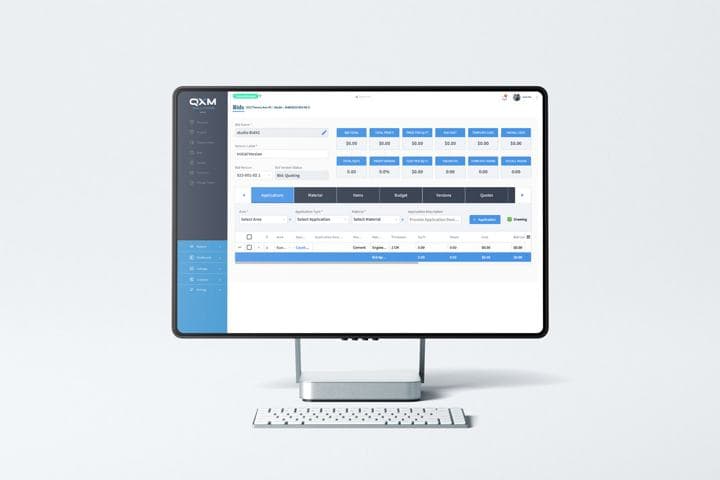
Sales Pro covers lead to contract. The difference is not the length of its feature list. It is that the number underneath every quote is calculated rather than assumed, which changes what a business can profitably say yes to.
- 01Leads through signed contract
- 02Drawing tools for any application
- 03Labor and material calculated per job
- 04Priced to your target margin
- 05Change orders calculated, not itemized
How this differs from the rest of the industry.
Six questions worth asking of any system you are evaluating.
An item catalog. Someone enters the items, each carries a price, and the estimator carries the burden of making the list complete.
The job itself. Labor is calculated per process from the parts, alongside the material, supplies and items the work will consume.
The estimator adds money based on judgment. Nobody knows how much is enough, and the hard jobs quietly earn the least.
Complexity is measured and priced. Difficult work carries the margin it needs, so it stops being the work you avoid.
Manual itemizing, hours of it, at a level of accuracy well below the original bid.
Create a version, make the change, and the difference is calculated automatically at the same accuracy as the original.
Architectural plans, re-interpreted on the floor by whoever is holding them.
Fabrication-ready drawings produced during the bid and passed straight into Shop Pro and Field Pro.
Your most experienced estimator, and the result changes when they are unavailable.
Any estimator working through a guided process, with the calculations handled by the system.
A markup, applied to a cost that was estimated rather than known.
The net margin you set, applied to a cost calculated from the work.
How the business changes.
Take the work you have been declining
Shops narrow their work to what they can predict, because declining complexity is the only risk control available when it cannot be priced. Priced accurately, that work becomes available again.
Hold margin through change
Most jobs change. When change orders are produced in minutes at full accuracy and priced to the same target, scope movement stops eroding the margin the job was sold on.
Bid capacity stops depending on one person
When the calculations belong to the system, a newer estimator produces the same answer as your best one. Growth stops waiting on a single desk.
Where to go next.
If one of these is the reason you are here, the problem pages go through what it takes to fix it, including the parts that are not software.

The best fabricators in the country are already scaling with QXM Pro.
Precision · Automation · Capacity Control
Everything in the platform
- Estimating
- Drawing
- Quoting
- Contracts
- Change orders
- Purchasing
- Receiving
- Inventory
- Remnants
- Demand planning
- Scheduling
- Capacity
- Work orders
- Shop floor
- Field
- Templating
- Install
- Production work
- Reporting
- Integrations